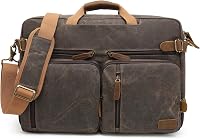
Messenger Bags: The Complete Buying Guide
A good messenger bag matches your daily load, not the largest size you can find. Check laptop size, strap adjustment, pocket layout and material before you choose, and size up only when your normal carry needs the room.
On this page (12 sections)
- How this guide is organized
- How does a messenger bag differ from other work bags?
- What size messenger bag should you buy?
- How should you fit a messenger bag strap?
- What material is best for a messenger bag?
- How do pockets and organization affect daily use?
- What closure works best for a messenger bag?
- Which products suit specific messenger bag uses?
- Which messenger bag style should you choose?
- Messenger bag vs backpack: which should you choose?
- How should you pack and care for a messenger bag?
- Final decision: which messenger bag should you buy?
A good messenger bag fits your laptop, your route and your daily items without forcing you to carry empty space. Start with the items you carry most days, then choose size, strap and pocket layout around them.
Most buyers choose too much room for the load they actually carry. A bag that is too large can swing, catch on doors and make small items hard to find.
A bag that is too small leaves the laptop exposed or forces files into the main pocket.
How this guide is organized
This pillar covers the decisions that shape every other messenger bag guide on the site. Size sections help you narrow the field first.
Material and strap sections then help you rule out poor fits before you compare specific models.
How does a messenger bag differ from other work bags?
A messenger bag is a single-strap bag worn across the body, usually with the body resting at the hip. For a close look at a specific model, read the Timbuk2 Classic Messenger review.
That shape gives you fast access without taking the bag off your shoulder.
A briefcase usually has top handles and a more structured, upright shape. Our guide on How Does a Briefcase Differ from a Messenger Bag? explains how the two differ in carry, access and office use.
A backpack splits the weight across two straps. That split can suit heavier loads, while a messenger bag shifts more weight to one shoulder.
Fit and total weight matter more than the category name.
A tote carries weight from the shoulder or hand without a crossbody strap. If you want a wider opening and hand carry, read messenger bag vs tote before you decide.
A crossbody bag is often smaller and closer in spirit to a large purse or pouch. For a closer comparison, see messenger bag vs crossbody bag.
Choose a messenger bag when you want one-strap access, a slimmer side profile and a bag that sits at your hip. Choose another style when your load, posture or access needs point elsewhere.
What size messenger bag should you buy?
The right size is the smallest size that holds your normal load with room to close it cleanly. Measure your laptop, tablet and longest daily item before you compare bag dimensions.
Small bags suit a phone, wallet, keys, a compact tablet and a light notebook. They work best when you carry the same few items each day and do not need a work laptop.
Larger bags suit a laptop, files, a charger, a lunch container and a water bottle. Extra room helps only when those items appear in your daily load on a regular basis.
If your main question is capacity, start with our best large messenger bag guide. It helps you judge whether a larger body will help or simply add bulk.
For a lighter load, our best small messenger bag guide shows how compact models handle daily essentials. Compare the usable depth as well as the headline width.
For larger carry needs with a specific shopper in mind, see best large messenger bag for women and best small messenger bag for women. For men, see best small messenger bag for men and best medium messenger bag for men.
An extra-large model makes sense only when you carry bulky items most days. Our best messenger bag xl guide covers that narrow use case.
How to measure a messenger bag for your own gear
Place your laptop or tablet on a table and note its length, height and thickness with its case on. Add a small margin so the bag does not press hard against the zipper or flap.
Note the longest item you carry, such as a notebook or water bottle. Width determines whether long items lie flat, while depth determines whether the bag closes without bulging.
Check strap drop next. A strap that is too short puts the bag high on your ribs.
A strap that is too long lets the bag hit your thigh or swing while you walk.
The Targus model below measures 3.25 in by 16.75 in by 12.8 in and fits most 16 in laptops. That slim, rectangular shape suits work carry more than a soft, deep pouch shape.
How should you fit a messenger bag strap?
A good fit puts the bag at your hip with the strap crossing your back, not hanging from one shoulder. The strap should support the base without pulling the bag up under your arm.
Adjust the strap while you wear your normal coat and shoes. Walk a few steps, sit down and stand up, then check that the bag stays clear of your leg and chair.
A longer strap drop helps when you wear the bag across your body. The Travelon model has a strap drop length of 18 in to 30 in, with a 54 in strap length.
That range suits different heights and coat weights.
A padded strap helps when the loaded bag stays on one shoulder for long periods. Padding does not fix an overloaded bag, but it can reduce pressure at the contact point.
The KomalC leather model has an adjustable, detachable shoulder strap. A detachable strap also lets you carry the bag by its top handles when you want a briefcase-style carry.
Think about side switching as well. If you wear the bag on one side all day, the load shifts to that shoulder.
Switch sides during long walks when the bag feels heavy on one side.
Our best messenger bag strap replacement guide helps when a strap wears out or does not fit your height. Check strap width, hardware size and drop length before you order a replacement.
What material is best for a messenger bag?
The best material depends on how you want the bag to look, weigh and age. Leather, canvas and polyester each solve a different problem, and none wins for every reader.
Leather suits a polished office look and can develop a richer tone with use. The KomalC 18 in model uses premium top grain water buffalo leather.
Komal's Passion Leather says the bag is made by experienced craftsmen.
The smaller Komal's Passion Leather model uses full grain leather lined with durable canvas. Its brown leather is meant to darken and soften with use, which gives it a more vintage look over time.
Canvas suits a casual work or school look and often feels lighter in hand. Our best canvas messenger bag guide compares canvas options when leather feels too formal or too heavy.
Polyester suits a slim work briefcase and a lighter daily carry. The Targus model uses a polyester exterior with premium stitching and a polyurethane-coated bottom.
That build suits commuting and conference travel.
For wet weather, check our best waterproof messenger bags guide. A water-resistant coating is not the same as a fully waterproof build, so read the material and seam details before you rely on it.
If you plan to buy leather, check how the edges are finished. Our guide on What Is Edge Paint on a Leather Briefcase? explains why edge finish affects both looks and wear.
Leather messenger bags: what to check before you buy
Check the leather type, the lining and the zipper quality. Top grain and full grain describe different grades, so compare them with the bag weight and price tier rather than treating one label as a guarantee.
Look at the stitching around the strap tabs and handle roots. Those points carry the most stress, and neat, even stitching usually signals more careful build quality.
Check the lining for contrast. The KomalC 18 in model has a checkered lining, which can make small items easier to spot.
A dark lining can hide keys and pens in a deep pocket.
Leather needs more care than polyester or canvas. Wipe it with a soft cloth, keep it away from prolonged damp, and store it stuffed lightly so the shape holds when you are not using it.
Our best leather messenger bags for men guide covers leather options for that shopper group. For a wider satchel shape, see the best high quality leather satchel guide as well.
How do pockets and organization affect daily use?
Good organization means each daily item has a predictable place. You should be able to reach your keys, card and phone without digging through the main compartment.
A front pocket suits items you grab many times a day. A rear pocket suits flat items such as documents or a transit card.
A zip pocket inside the main body suits cables and small valuables.
The Travelon model has a front zip pocket for quick grab items and a rear zip pocket with RFID card and passport slots. Inside, it has two drop pockets, a zip pocket, a tethered keyclip and two water bottle pockets.
The Targus model has larger pockets for files, smaller slots for notepads and a power bank, plus an exterior document pocket on the back. That layout suits a workday with a laptop, files and small tech items.
The KomalC 18 in model has multiple internal sections for a phone, calculator, cards and pens, plus zip compartments. That many sections help only if you will actually use each one.
Our best messenger bag with pockets guide compares pocket layouts in more detail. Count your daily items first, then match the pockets to that list.
A zip top helps when you carry small items that could fall out of an open flap. Our best zip top messenger bag guide covers that closure style.
Do not pay for pockets you will never use. Each extra pocket adds weight, takes space and can make the main compartment harder to pack.
What closure works best for a messenger bag?
The best closure balances fast access with security for your load. A flap gives fast access and a classic look, while a zip top keeps small items contained.
The Komal's Passion Leather satchel uses concealed locks under the straps for fast opening and locking. That design suits a bag you open and close many times during a workday.
The Targus model uses a zipper closure and a slim rectangular body. A zip top suits commuting, where you want the laptop and files to stay put while you move through crowds.
The Travelon model uses locking zippers as part of its anti-theft system. Travelon says the system includes slash-resistant mesh body panels, dual cut-resistant strap cables and a lockdown strap.
A buckle flap can look more formal than a zip top. It also takes longer to open and close, which matters when you reach for a card or phone on the move.
Check that the closure does not fight the bag shape. A stiff flap on a deep bag can press against a laptop, while a zip top on a soft bag can pucker when the bag is full.
For travel, a lockable closure adds a layer of security. Our best anti theft messenger bag guide compares bags built around that need.
Which products suit specific messenger bag uses?
Match the product to the job you do most days, not to the longest feature list. A travel bag, a laptop briefcase and a leather satchel solve different problems.
Travelon Anti-Theft Classic Messenger Bag: travel and daily security
The Travelon suits travelers and commuters who want security features in a compact bag. It measures 9 in by 12.5 in by 3.5 in and weighs 1.10 lb in the specs given.
Travelon says its 5 point anti-theft system includes locking zippers, slash-resistant mesh, dual cut-resistant strap cables, RFID blocking slots and drop pockets, and a lockdown strap. The description also mentions a hidden carabiner to secure the bag to a post or chair.
That security build adds weight and structure compared with a plain cloth pouch. It also narrows what fits inside, since the main compartment is only 3.5 in deep.
The two water bottle pockets and expansion pockets help with daily carry. This bag suits a traveler more than a student who needs room for books and a large laptop.
For travel-specific options, see our best messenger bag for travel guide. For school carry, see best messenger bag for school.
Targus 15-16 Inch Slim Lightweight Laptop Briefcase: slim laptop carry
The Targus suits professionals who carry a laptop plus files and small tech items. Its foam padded compartment fits most 16 in laptops and smaller, and its capacity is listed at 17 liters.
The bag has a padded grab handle, an adjustable padded shoulder strap and a rear trolley strap. That trolley strap helps when you travel with a roller suitcase and want hands-free movement.
The polyester exterior has premium stitching and a polyurethane-coated bottom. The slim 3.25 in depth keeps the bag close to your body, which helps in crowded transit.
This model is less suited to bulky items such as a large water bottle or a thick jacket. Choose it for laptop-led carry, not for general cargo space.
Our best laptop messenger bag guide compares more laptop-first options. For lighter carry, see best lightweight messenger bag and best lightweight messenger bags for women.
KomalC 18 Inch Leather Briefcase: formal work carry
The KomalC suits office buyers who want leather and room for a laptop plus files. It measures 18 in by 12.5 in by 4 in and weighs 3.9 lb.
The bag uses YKK metal zippers and premium top grain water buffalo leather. It can be used as a briefcase, a laptop messenger bag or an office satchel, according to the maker.
Its trolley compatible strap lets you secure it to a suitcase during travel. That feature helps most when you already travel with a roller bag.
The 18 in width gives room for a laptop and files, but it also makes the bag more formal and more likely to bump in tight spaces. Check your desk and car space before you choose this size.
Leather crossbody bag messenger satchel: compact leather carry
The Komal's Passion Leather satchel suits readers who want leather in a compact size. It measures 11 in high by 9 in wide by 3.5 in deep and weighs 1.9 lb.
It fits a tablet up to 11 in, a phone, a couple of notebooks and small daily items. It has one big front pocket and two zip compartments, including one back zip.
The bag uses full grain leather with a canvas lining and an adjustable shoulder strap. The simple buckle design gives it a more vintage look, and the leather is meant to age with use.
This size does not suit a 16 in laptop. Choose it for meetings, classes and light daily carry where a tablet replaces a laptop.
For women shoppers, see our best messenger bags for women guide. For bulk buying, see best messenger bag bulk.
Which messenger bag style should you choose?
Style is the outer shape and closure you will carry every day, so choose the one that fits your wardrobe and habits. Our messenger bag styles guide breaks down the main shapes.
A classic flap messenger suits a heritage look and casual office wear. It gives fast access, but a flap can press against a tall laptop when the bag is full.
A slim laptop briefcase suits a modern office look. It carries a laptop flat and looks neat in a meeting room, but it offers less room for soft, bulky items.
A satchel shape suits a more structured, formal look. Top handles and a firm base help it hold its shape on a desk or car seat.
A crossbody pouch suits light carry and a casual look. It works when your daily load is small enough that a larger messenger bag would feel empty.
Consider how the bag looks with your normal clothes, not only in a product photo. A dark leather bag reads more formal, while a canvas or nylon bag reads more casual.
Think about the season as well. A tall, deep bag can trap heat against your hip in summer, while a slim bag may feel cramped when you add a coat in winter.
If you sew your own gear, our messenger bag pattern guide helps you compare pattern choices. Check seam allowances, lining and hardware before you cut fabric.
Messenger bag vs backpack: which should you choose?
Choose a backpack when your load is heavy or you walk long distances. Two straps split the weight, which can feel better for a heavy laptop and books.
Choose a messenger bag when you want fast side access and a slimmer profile. You can swing the bag to your front, open it and grab an item without taking it off.
Our messenger bag vs backpack guide compares the two styles by load, comfort and access. Read it if you switch between school, work and travel during the week.
A messenger bag puts the full load on one shoulder. That pressure matters more as the bag gets heavier, so keep the total weight in check.
A backpack can feel awkward when you sit on a bus or reach into the main compartment. A messenger bag can swing and bump door frames when it is too large.
Use your commute as the test. Stand, walk, sit and stand again with the bag loaded as you would on a normal day.
The style that stays comfortable through that sequence is usually the right one.
How should you pack and care for a messenger bag?
Pack a messenger bag with heavy items close to your back and small items in fixed pockets. That layout keeps the bag stable and helps you find items without emptying the main body.
Place the laptop or tablet in its padded sleeve first. Add files flat, then place cables, chargers and small items in their slots.
Put the water bottle in a side pocket when one exists.
Leave a small gap before you close the zip or flap. If the bag strains to close, remove the least used item rather than forcing the closure.
For leather, wipe the surface with a soft, dry cloth after use. Keep leather away from direct heat and prolonged damp, and store the bag with light stuffing to hold its shape.
For polyester or canvas, brush off dust and spot clean with a damp cloth. Let the bag air dry fully before you store it, since trapped moisture can cause odors.
Check straps, zippers and stitching on a regular schedule. A loose strap tab or sticky zipper is easier to fix early than after it fails during a commute.
Consignment and resale value depend on condition as well as brand. Keep the shoulder strap, any detachable parts and the original hardware together so the bag stays complete.
Final decision: which messenger bag should you buy?
Buy the bag that fits your laptop, your strap height and your most common load. Measure first, then narrow by material and pocket layout.
Pick the Travelon for compact travel and security features. Pick the Targus for slim laptop and file carry.
Pick the KomalC 18 in leather model for formal work use. Pick the 11 in Komal's Passion Leather satchel for compact leather carry with a tablet.
If you still need to narrow the field, start with our best large messenger bag guide for bigger loads, our best small messenger bag guide for lighter carry, and our best messenger bag with pockets guide for organization. Those three guides cover the main sizes and layouts most buyers compare.
A messenger bag should make your daily route easier, not harder. Choose the smaller size that holds your normal load, check the strap fit, and you will carry it with more comfort each day.
Frequently asked questions
What should I measure before buying a messenger bag?
Measure your laptop or tablet, including its case, then compare it with the bag length and depth. Also note the longest item you carry daily, such as a water bottle or notebook, because width alone does not show usable space.
Is a messenger bag good for a laptop?
A messenger bag can carry a laptop well when it has a padded sleeve or compartment sized for your device. Check the maximum device size, the internal dimensions and whether the laptop sits flat without pushing against the zipper or flap.
How should a messenger bag strap fit?
The strap should let the bag rest at your hip or just below it, with the bottom supported when you walk. Adjust the strap while wearing your normal shoes and coat, then check that the bag does not swing into your leg at each step.
Leather or canvas messenger bag: which is better?
Leather suits a polished work look and can develop a patina with use, while canvas often suits casual carry and lighter daily loads. Choose by care, weight and appearance, and check the exact material rather than relying on the style name alone.